Ficus Ginseng Care: Light, Roots and Leaf Drop
Look after a Ficus microcarpa Ginseng without chasing every fallen leaf.
Quick questions
Is Ficus ginseng a true ginseng?
No. It is a cultivated form of Ficus microcarpa with swollen exposed roots.
Why did it drop leaves after a move?
A sudden change in light or temperature can cause stress. Check the pot and watch new growth.
How often should I water it?
Water when the upper mix begins to dry and let the pot drain; avoid a fixed interval.
Can I prune it?
Yes. Prune healthy shoots to keep the canopy compact, using clean tools.
Is the sap safe for pets?
No. Ficus microcarpa can irritate pets if eaten; keep it out of reach.
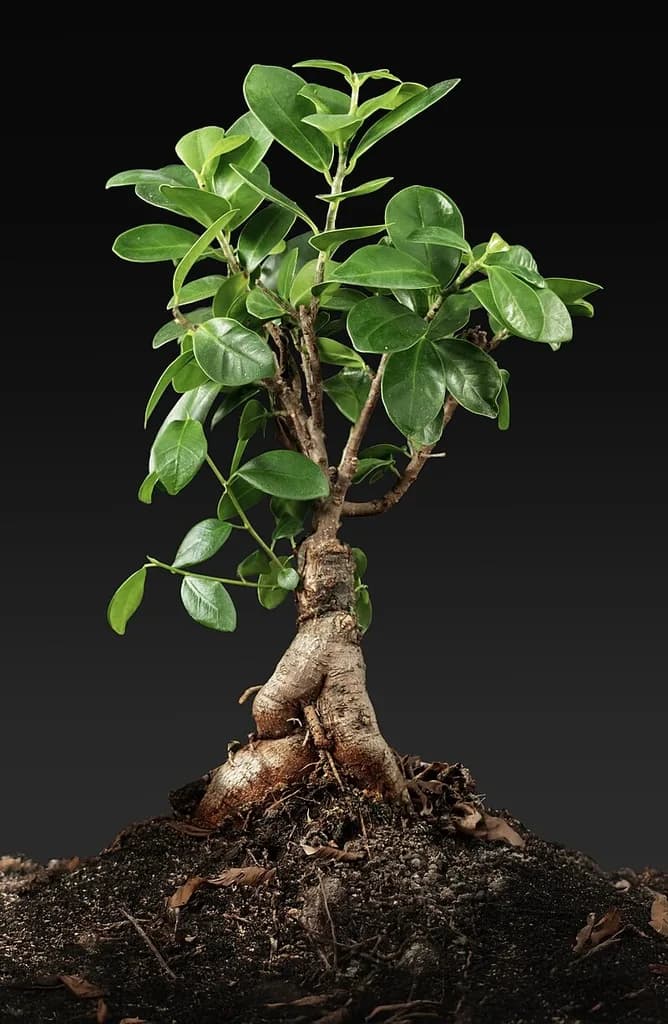
Ficus ginseng is a cultivated form of Ficus microcarpa with thick, exposed roots. The pictured plant shows the bonsai style. It is not a true ginseng and may be grafted, so new shoots can look different from the compact top growth.
Keep the light steady
Give a warm, bright position with useful direct or filtered light. Avoid sudden moves between very different conditions. Leaf drop after a move can be a stress response; assess new growth before changing everything at once.
Water by checking the pot
Use a draining container and check the mix below the surface. Water when it begins to dry, then let excess drain. Do not keep roots submerged or follow a fixed calendar. A dry root ball and damaged roots in wet mix can both lead to leaf loss.
Shape and inspect
Prune healthy shoots to keep the canopy compact. Watch for scale and other pests on stems and leaf undersides. Repot when the root system crowds its container, not simply because a year has passed.
Sap and pets
Ficus has milky sap that can irritate skin. NC State warns that F. microcarpa foliage, fruit and sap can irritate pets. Keep it out of reach and contact a veterinarian after ingestion.
Related LeafLovers guides
Sources for this guide
2 sources
Spotted something that needs correcting? Send a message.