Watermelon Dischidia Care: Airy Roots and Gentle Light
Keep the patterned trailing leaves bright without waterlogged roots.
Quick questions
Does watermelon dischidia need direct sun?
No. Give bright filtered light; strong direct sun may scorch leaves.
How often should I water it?
Check the airy mix and water when it starts to dry, letting excess escape.
Does humidity mean keeping the pot wet?
No. It likes humid air and ventilation, but roots are sensitive to waterlogging.
Can I grow it on a trellis?
Yes. Its trailing stems can hang or climb a light support.
Is Dischidia ovata safe for pets?
A species-specific veterinary listing was not confirmed. Keep it out of reach, and avoid contact with its irritating sap.
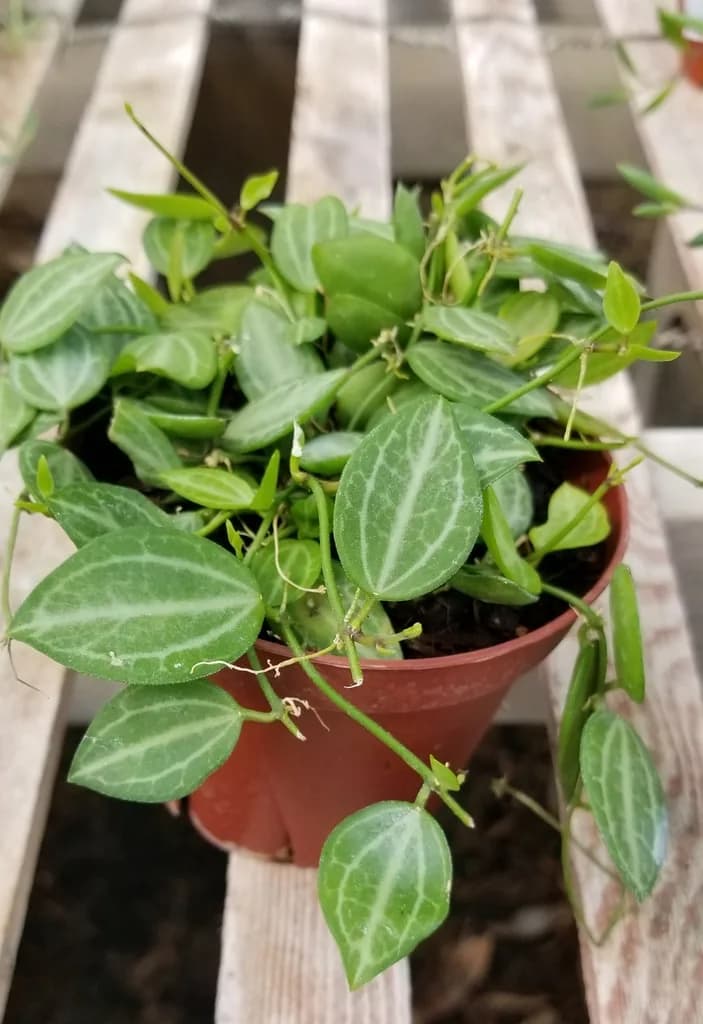
Watermelon dischidia (Dischidia ovata) trails on slender stems with small leaves patterned like tiny melons. It is related to Hoya and grows with airy roots. This guide is for D. ovata, not every plant sold simply as “Dischidia.”
Light and warmth
Give bright, filtered light. Strong direct sun can scorch the patterned leaves. Keep the plant warm and away from cold draughts; a bright bathroom works only if it also has good air movement.
Keep roots airy
Use a small draining pot and a loose mix containing bark, perlite or similar coarse material. Water when the mix has started to dry, then let excess drain. NC State notes that this plant likes humidity but is sensitive to overwatering. Humid air and a constantly wet pot are different things.
Guide the vines
Let stems trail or train them on a light support. If you trim, take a healthy cutting with nodes. Check leaf undersides and joints for pests before treating. A shrivelled leaf can mean either a dry root ball or failing roots in wet mix, so inspect the pot first.
Sap and pets
Milky sap can irritate skin; wear gloves when pruning. A species-specific veterinary toxicity listing was not confirmed, so keep the plant out of reach rather than calling it pet-safe.
Related LeafLovers guides
Sources for this guide
1 source
Spotted something that needs correcting? Send a message.