Cyclamen Care Guide - Light, Water, Soil & Expert Tips
A shy winter bloomer that disappears completely in summer. Do not panic - it is just sleeping.
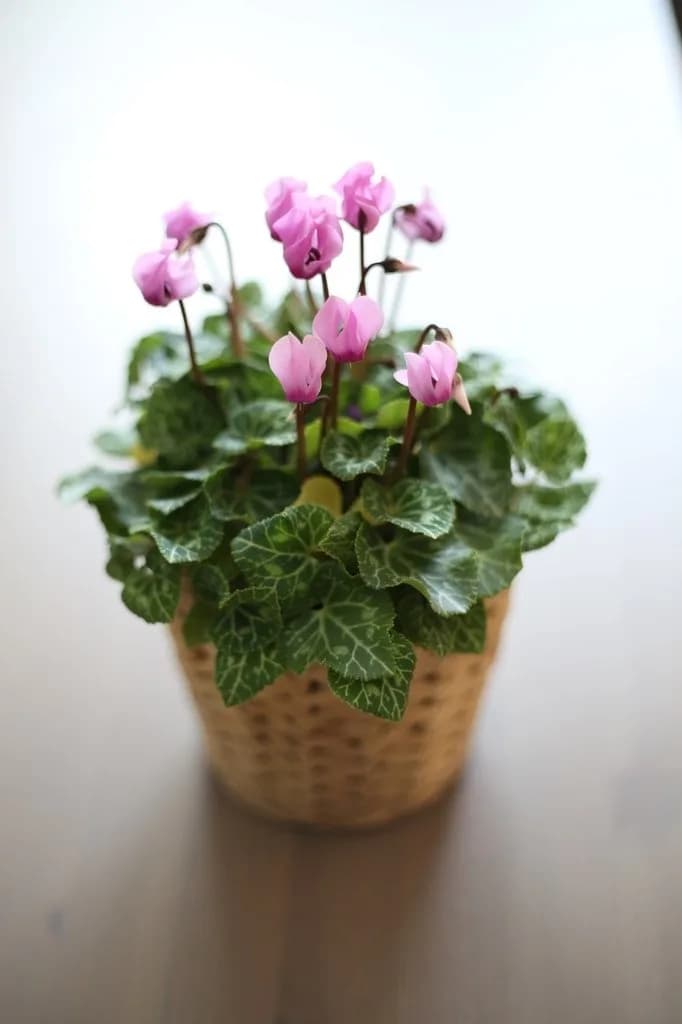
The Cyclamen (Cyclamen persicum) is a quiet, elegant winter bloomer that plays by its own calendar. While other plants gear up for growth in spring, cyclamen starts shutting down. By summer, it goes fully dormant - dropping every leaf and appearing completely dead. But do not throw it away. It is just sleeping. This cyclamen care guide will help you understand its unusual cycle and keep it blooming beautifully year after year.
Light
Cyclamen prefer bright but gentle light.
- Best: Bright indirect light from an east- or north-facing window
- Acceptable: Medium indirect light
- Avoid: Direct sunlight and hot windowsills - cyclamen hate heat
Cool and bright is the combination cyclamen love. A windowsill in an unheated room during winter is often perfect.
Watering
Water from below - the tuber at the center rots easily when wet.
- Method: Place the pot in a saucer of room-temperature water for 15-20 minutes. Remove and drain
- Frequency: Every 4-6 days during active growth (autumn through spring)
- The rule: Never pour water directly onto the tuber or crown. Bottom watering protects the tuber from rot
- Dormancy (May-August): Stop watering completely. The tuber rests dry
Let the soil dry slightly between waterings, but do not let it go completely dry during the growing season. During dormancy, however, leave it totally dry.
Humidity
Moderate humidity suits cyclamen, but cool air matters more.
- Ideal range: 50-60%
- Cool, fresh air is more important than high humidity
- Avoid warm, stuffy rooms - cyclamen decline rapidly in heat
- A pebble tray provides gentle ambient moisture
Soil & Potting
Well-draining soil that does not stay waterlogged is essential.
- Best mix: Standard potting mix with perlite and a small amount of sand
- Pot: Compact pot with drainage holes. The tuber should sit partially above the soil surface
- Repotting: In early autumn when the tuber breaks dormancy, into fresh soil
- Important: Plant the tuber with the top third exposed above the soil line
Common Problems
Tuber rot - The most common killer. Caused by water sitting on or around the tuber crown. Always water from below and ensure good drainage.
Flowers and leaves collapsing - Usually means the room is too warm. Cyclamen prefer temperatures of 10-18C (50-65F). Move to a cooler spot immediately.
Yellowing leaves in spring - This is normal. Cyclamen naturally enter dormancy as temperatures rise. Reduce watering gradually and stop completely by May.
No flowers in the second year - The tuber needs a proper dry summer dormancy and a cool autumn to trigger new blooming. Keep the dry tuber in a cool, dark spot through summer, then resume watering and light in September.
Toxicity
Cyclamen are moderately toxic to cats and dogs. The tuber is the most toxic part. Ingestion can cause vomiting, diarrhea, and mouth irritation. Keep out of reach of pets.
Quick Reference
| Detail | Info |
|---|---|
| Light | Bright indirect, cool spot |
| Water | Bottom water every 4-6 days, stop in summer |
| Humidity | 50-60%, cool air essential |
| Difficulty | Intermediate |
| Personality | Shy |
| Toxic to pets? | Moderately toxic to cats and dogs |
Why Cyclamen Belongs in Your Collection
Cyclamen bring color exactly when you need it most - in the dark, cold months of winter. Their delicate upswept petals in pink, red, white, and purple are a gentle, Shy kind of beauty. This cyclamen care guide shows that the key is understanding their rhythm: active and blooming in winter, dormant and hidden in summer. Respect the cycle, water from below, keep things cool, and your cyclamen will return faithfully year after year.
Care reference
Need the full care profile for Cyclamen?
Check the encyclopedia for light, watering, soil, pet safety, and pot guidance - then use LeafLovers to fit it to your plant and home.
Free weekly plant care tips
Get personalised tips delivered to your inbox. No app needed, no spam, unsubscribe anytime.
No credit card. No tricks. No strings. Just plants.