Crown of Thorns Care Guide - Light, Water, Soil & Expert Tips
Sharp thorns, toxic sap, and flowers that never quit. This succulent has serious attitude.
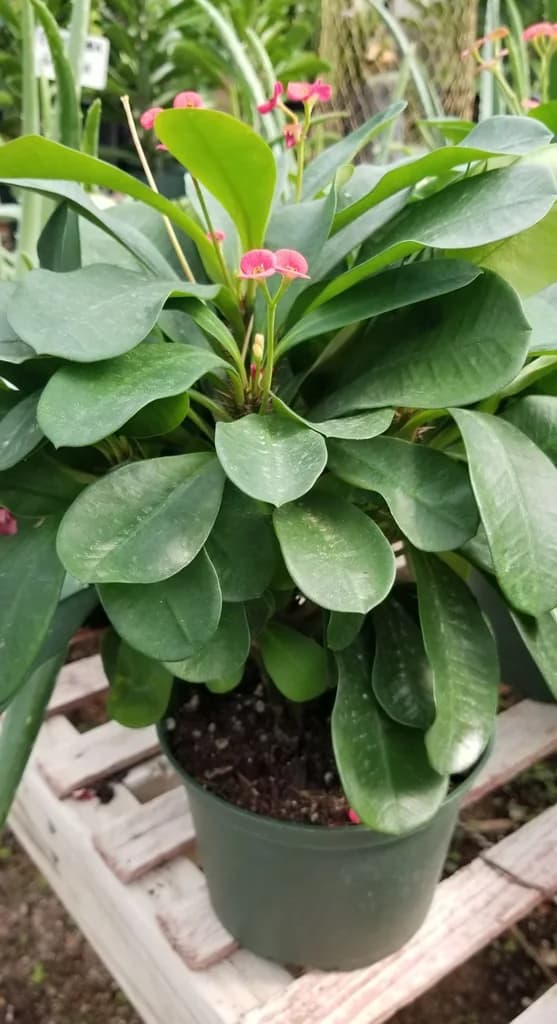
The Crown of Thorns (Euphorbia milii) is a sassy succulent that blooms almost year-round with minimal effort - as long as you respect its boundaries. Those sharp thorns and toxic milky sap are not decorative; they mean business. But give this plant a sunny windowsill and leave it mostly alone, and it will reward you with cheerful clusters of red, pink, or yellow flowers nearly every day of the year. This crown of thorns care guide covers everything from light to safe handling.
Light
Crown of thorns craves direct sunlight - the more, the better.
- Best: Direct sunlight, 4-6+ hours daily
- Acceptable: Bright indirect light, though flowering will decrease
- Avoid: Low or medium light - the plant will survive but stop blooming
A south-facing window is ideal. More light means more flowers, and this plant can handle intense sun without burning.
Watering
Crown of thorns is very drought-tolerant. Its thick stems store water like a true succulent.
- Summer: Water every 14-21 days, letting the soil dry out completely
- Winter: Water even less - every 3-4 weeks
- The rule: Let the soil go completely dry between waterings. When in doubt, wait longer
Overwatering causes root rot and stem collapse. This plant is adapted to survive dry conditions and will tolerate significant neglect between waterings.
Humidity
Low humidity is preferred.
- Ideal range: 20-40%
- No misting needed - avoid getting water on the foliage
- Normal dry household air is perfect
- Good air circulation helps prevent fungal issues
Soil & Potting
Fast-draining cactus mix is essential.
- Best mix: Cactus and succulent mix with extra perlite or pumice
- Pot: Small, snug pot with excellent drainage holes
- Repotting: Only when truly outgrown - crown of thorns blooms best when slightly rootbound
- Handling: Always wear thick gloves when repotting. The thorns are sharp and the milky sap is toxic and irritating to skin
Common Problems
No flowers - Insufficient light. Move to a sunnier spot with more direct sun. Crown of thorns needs strong light to maintain its nearly continuous bloom cycle.
Dropping leaves - Often caused by overwatering, sudden temperature drops, or being moved. Check watering frequency and ensure stable conditions.
Soft, mushy stems - Root rot from overwatering. Remove the plant from its pot, cut away affected roots and stems with clean scissors (wear gloves), and repot in dry cactus mix.
White milky sap on broken stems - This is normal. The sap is toxic and irritating - wash hands immediately if you come in contact. Keep away from eyes.
Toxicity
Crown of thorns is toxic to cats, dogs, and children. The milky sap causes skin irritation on contact and severe mouth and digestive irritation if ingested. The thorns can also injure pets and small children. Place this plant well out of reach and always handle with gloves.
Quick Reference
| Detail | Info |
|---|---|
| Light | Direct sun, 4-6+ hours |
| Water | Every 14-21 days, dry out completely |
| Humidity | 20-40% - dry preferred |
| Difficulty | Beginner |
| Personality | Sassy |
| Toxic to pets? | Yes - toxic to cats, dogs, children |
Why Crown of Thorns Belongs in Your Collection
The crown of thorns is a contradiction in the best way - fierce thorns paired with delicate flowers, drought-loving toughness paired with nearly year-round blooms. This sassy succulent asks for almost nothing: sun, dry soil, and respect for its boundaries. This crown of thorns care guide proves that low-maintenance and high-reward can coexist beautifully. Just handle with gloves and admire from a reasonable distance.
Care reference
Need the full care profile for Crown of Thorns?
Check the encyclopedia for light, watering, soil, pet safety, and pot guidance - then use LeafLovers to fit it to your plant and home.
Free weekly plant care tips
Get personalised tips delivered to your inbox. No app needed, no spam, unsubscribe anytime.
No credit card. No tricks. No strings. Just plants.