Croton Care: Bright Light, Leaf Drop and Colour
Keep Codiaeum variegatum bright and check the pot before reacting to leaf loss.
Quick questions
Why is my croton dropping leaves?
Check for a recent move, cold draft, low light, moisture trouble and pests. Several causes can overlap.
Does croton need direct sun?
Bright light helps colour; introduce direct sun gradually to avoid scorching shade-grown leaves.
Why did the colours fade?
Review the light available to new leaves, while remembering that cultivars have different natural patterns.
How often should I water?
Water after checking below the surface and drain fully. Light and season change the timing.
Should I mist it daily?
Misting does not reliably raise room humidity. If air is persistently dry, a humidifier may help.
Is croton safe for pets?
Do not let pets chew it. NC State Extension lists Codiaeum variegatum as poisonous; consult a veterinarian after ingestion.
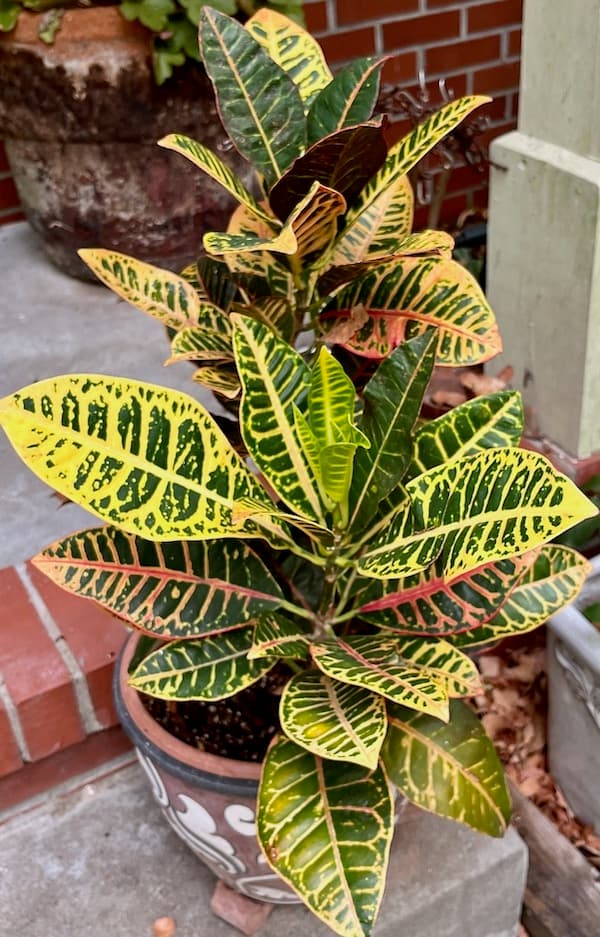
Croton (Codiaeum variegatum) is sold in many leaf shapes and colour patterns. The photograph shows one variegated cultivar; your plant may look different while needing the same careful light and drainage checks.
Light and position
Give bright light to maintain strong colour. Some direct sun is useful after gradual adjustment, but a plant from a shaded shop can scorch if moved abruptly to a hot window. In deep shade, new foliage may lose colour and lower leaves may drop.
Water by checking the pot
Check the mix below the surface. During active growth, water when the upper mix has begun to dry, wet the pot evenly and let excess escape. In cooler, darker periods it dries more slowly, so use the pot rather than a weekly schedule.
Potting and growth
Use a well-draining, organic mix in a pot with holes. Keep the plant warm and away from cold drafts. A humidifier can help in an especially dry room, but avoid leaving wet foliage crowded without airflow.
Work through common problems
After a move, a croton may drop leaves while adjusting. Before adding water or fertiliser, check light, temperature, pot moisture and leaf undersides for pests. Repeated yellowing with a persistently wet pot calls for a root check; dry crisp edges call for a different moisture review.
Safety and your next check
Croton sap can irritate skin, and NC State Extension lists the plant as poisonous. Wear gloves for pruning and keep leaves away from chewing pets and children. Judge a recovery by healthy new foliage, not by old leaves reappearing.
Related LeafLovers guides
Sources for this guide
2 sources
Spotted something that needs correcting? Send a message.