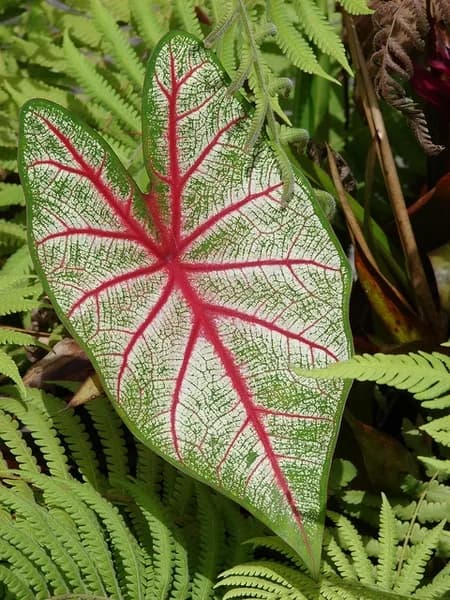
Caladium with large paper-thin leaves in dramatic pink, white, and green patterns
Care Guide

Caladium Care Guide - Light, Water, Soil & Expert Tips

A dramatic seasonal performer with leaves like living paintings.

7 min read LeafLovers Plant Guides

Caladium is the definition of dramatic beauty. Its enormous, paper-thin leaves come in breathtaking combinations of red, pink, white, and green - like living watercolor paintings. But true to its dramatic personality, Caladium goes through a full dormancy cycle, dropping every single leaf in winter before rising again in spring. This caladium care guide will walk you through both the spectacular growing season and the quiet dormancy.

Important safety note: Caladium is toxic to cats, dogs, and children. All parts of the plant contain calcium oxalate crystals that cause painful swelling if ingested. Always keep this plant well out of reach.

Light

Caladium prefers bright, indirect light. Direct sunlight can burn the thin, translucent leaves. Some varieties - particularly the newer sun-tolerant cultivars - handle more light, but indirect is safest for most. In too little light, the vibrant colors fade and growth becomes sparse.

Watering

Keep the soil evenly moist during the growing season, watering roughly every 8 days. Caladium comes from tropical regions and does not like drying out while actively growing. However, avoid waterlogged soil, which can rot the bulb. Once dormancy begins (when leaves start dying back), gradually reduce watering until you stop completely.

Humidity

Caladium loves humidity between 60 and 80 percent. High humidity keeps those large, thin leaves from developing crispy edges. A humidifier, pebble tray, or naturally humid room makes a noticeable difference. Grouping tropical plants together also helps.

Soil & Potting

Plant caladium bulbs about 2 centimeters deep in a wide pot - they spread horizontally rather than deep. Use a rich, moisture-retentive mix with perlite for drainage. A blend of peat moss, potting soil, and perlite in equal parts works well. The pot should have drainage holes to prevent the bulbs from sitting in water.

Common Problems

Drooping leaves: Usually means the plant needs water or the humidity is too low. Check both and adjust accordingly.

Fading colors: Not enough light. Move to a brighter spot with indirect light. Colors are most vivid with good light levels.

Rotting bulb: Overwatering or poor drainage. Ensure the soil is moist but not waterlogged, and that the pot drains well. This is especially critical during dormancy - the bulb should be kept nearly dry.

Leaves dying back in autumn: This is completely normal, not a problem. Caladium goes fully dormant in winter. Allow the leaves to die naturally, then store the bulb in a cool, dry place until spring.

Toxicity

Caladium is toxic to cats, dogs, and children. The calcium oxalate crystals cause intense mouth pain, drooling, and swelling if any part of the plant is chewed or ingested. Wear gloves when handling bulbs if you have sensitive skin. This is not a plant for homes with very young children or curious pets.

Quick Reference

Care AspectDetails
LightBright indirect
Water every8 days (growing season)
Humidity60-80%
SoilRich, moisture-retentive with perlite
ToxicityToxic to pets and children
DifficultyIntermediate

Why Caladium Belongs in Your Collection

No other houseplant delivers the color impact of Caladium. Those enormous, painted leaves are genuinely breathtaking. Yes, it sleeps through winter - but that makes the spring comeback all the more exciting. This caladium care guide gives you everything you need to enjoy the full cycle of this dramatic tropical beauty.

Care reference

Need the full care profile for Caladium?

Check the encyclopedia for light, watering, soil, pet safety, and pot guidance - then use LeafLovers to fit it to your plant and home.

Open care guide

Free weekly plant care tips

Get personalised tips delivered to your inbox. No app needed, no spam, unsubscribe anytime.

No credit card. No tricks. No strings. Just plants.

Plant Doctor

AI diagnosis connected to your plant's actual care history. Personalized advice, not generic tips.

Get Plant Doctor

Identify a Plant

Snap a photo and instantly know what plant you have - plus how to care for it.

Identify now
Lightweight and fast
Your data stays yours
Plants with personality
Genuinely free to use

FREE TO USE

🌱Unlimited plants
πŸ””Smart reminders
πŸ“‹AI paste-to-add (10 free)
πŸ“šFull care guide library
πŸ“ΈPlant photo journal
πŸ“ŠExport all your data
Try LeafLovers Free

Your plants deserve better than a sticky note

Smart reminders that adapt to your pot size, light, and seasons.

πŸ’§Watering reminders that actually learn
🩺AI plant doctor with photo diagnosis
πŸ›‘οΈPet safety warnings on every plant
πŸ”’Your data stays yours - always exportable
Start Growing Free

No credit card. No tricks. Ready in 30 seconds.

LeafLovers dashboard showing weekly care, plants needing soil checks, and smart watering reminders