Butterwort Care: Sticky Leaves and Species Differences
Identify your Pinguicula before choosing a watering routine.
Quick questions
Does butterwort eat fungus gnats?
Its sticky leaves can trap small insects, including gnats, but it will not replace control of wet potting mix.
Should I use regular potting soil?
No. Use a nutrient-poor medium suitable for the identified Pinguicula species.
Should the tray always contain water?
Not for every species or season. Temperate and Mexican butterworts have different rest periods and moisture needs.
Do I need to feed it insects?
No. It can catch small insects itself; light and the right medium matter more.
Why are the leaves smaller in winter?
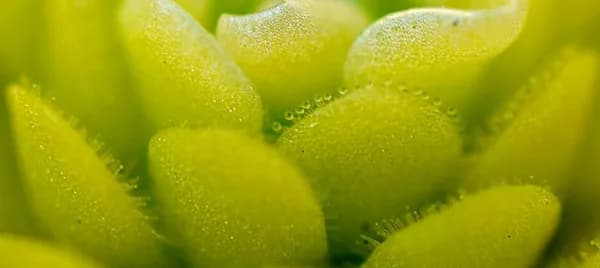
Some Mexican butterworts form a smaller, succulent-like winter rosette. Verify the species before changing care.
Butterwort (Pinguicula) catches tiny insects on its sticky leaves. It is a genus, not a single indoor-care recipe: temperate species may need a winter dormancy, while many Mexican species form a smaller, succulent-like winter rosette. Check the species label before deciding how wet to keep its pot.
Start with light and lean medium
Give bright light with protection from scorching heat. Use a nutrient-poor carnivorous-plant mix suited to the species, not ordinary fertilized houseplant soil. The leaves do the catching; there is no need to feed the plant insects by hand.
Match the water to the plant
NC State describes many outdoor butterworts growing in consistently moist, poor soil. A Mexican species in its dry-season succulent phase needs a different approach. Use low-mineral water and check the species' seasonal cycle rather than leaving every butterwort sitting permanently in water.
Read the leaves
A few trapped gnats are normal. If leaves collapse and the crown softens, check whether the medium is too wet for that species or season. A smaller winter rosette on a Mexican type can be normal, while temperate types may rest more fully.
Before you buy
Ask for a botanical name. It helps you choose the right medium and winter routine, and prevents a generic “keep wet” instruction from harming a Mexican plant.
Related LeafLovers guides
Sources for this guide
2 sources
Spotted something that needs correcting? Send a message.