Begonia Care: Choose the Type Before You Water
Rex leaves and cane stems need a little different attention.
Quick questions
Are rex and cane begonias the same?
No. Rex types are rhizomatous foliage plants; cane types have upright stems and may produce hanging flowers.
How often should I water my begonia?
Check below the surface and water when the upper mix begins to dry. Pot size, light and begonia type affect timing.
Should I mist a rex begonia?
Avoid leaving its foliage repeatedly wet. A humidifier with air movement is a better way to support humidity.
What are white powdery patches on the leaves?
They may be powdery mildew. Isolate the plant, check the pattern and seek local extension guidance before treating.
Can I prune a cane begonia?
You can pinch a healthy cane tip to encourage branching. Rex types grow differently and need different shaping.
Are begonias safe for pets?
No. ASPCA lists Begonia species as toxic to cats and dogs; underground parts are especially concerning.
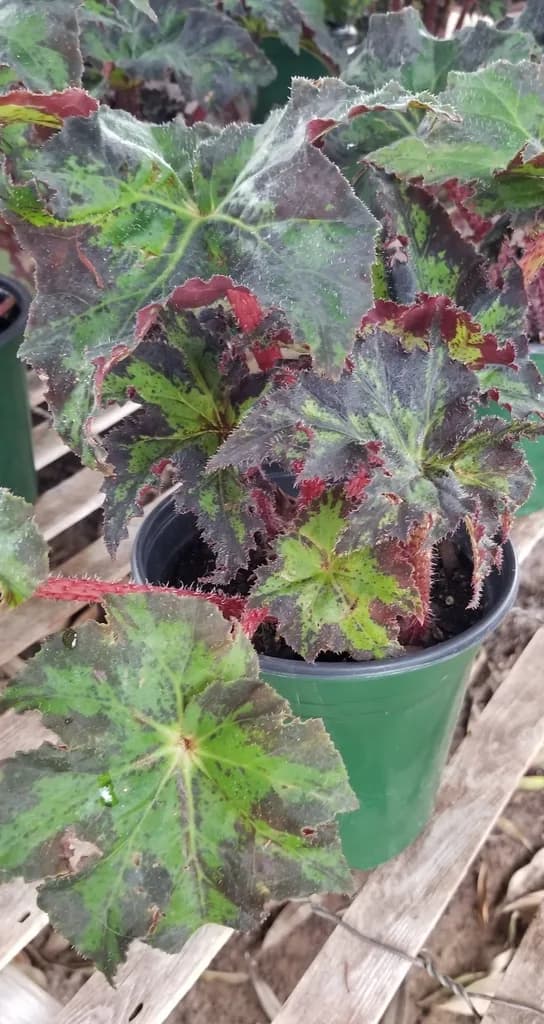
“Begonia” covers many different plants. Rex types are grown mostly for patterned leaves; cane types have upright stems and may flower freely. The photograph shows a rex-type plant. Identify the type you have before copying a care routine or comparing leaf colour with another begonia.
Light for the plant in front of you
Most indoor begonias appreciate bright, filtered light rather than harsh midday sun. Rex foliage can scorch in strong direct sun. A cane type may need a brighter position for sturdy stems and flowers. If growth stretches toward the window, try a brighter filtered position and reassess new leaves.
Water by checking the pot
Use a pot with drainage and a mix that holds some moisture while allowing air around roots. Check below the surface; water when the upper mix begins to dry, then drain the pot. Do not follow a fixed eight-day schedule. A rex and a cane begonia, or two pots of different sizes, may dry at very different rates.
Humidity and airflow
Rex types often benefit from higher humidity, but persistently wet leaves and stagnant air encourage disease. A humidifier and good air movement are more useful than repeated misting. Remove dead foliage and avoid packing plants tightly together.
If something looks wrong
White powdery patches can be powdery mildew; other spots may have different causes. Isolate a heavily affected plant and identify the issue before using a treatment. Mushy stems or a wet, declining pot warrant a drainage and root check. Brown edges alone cannot diagnose low humidity.
Growth and safety
Pinch a healthy cane tip to encourage branching; rex types grow from rhizomes and need different pruning. ASPCA lists Begonia species as toxic to dogs and cats, with underground parts of particular concern. Keep pots out of reach and contact a veterinarian after ingestion.
Related LeafLovers guides
Sources for this guide
4 sources
Spotted something that needs correcting? Send a message.