Basil Care: Strong Light, Harvesting and Fresh Starts
Grow Ocimum basilicum for leaves, then know when to start again.
Quick questions
Can basil grow indoors all year?
It can grow indoors with enough light and warmth, but individual plants age and eventually decline. Plan fresh starts.
How much light does sweet basil need?
Give it a sunny position with several hours of direct light, or supplement with a suitable grow light when daylight is weak.
How often should I water basil?
Check just below the surface; water when the mix starts to dry and let the pot drain. There is no reliable fixed interval.
Where should I cut basil to harvest?
Cut a stem tip just above a pair of leaves, leaving enough foliage for new side shoots.
Why are my basil leaves yellow with gray fuzz underneath?
That pattern can indicate basil downy mildew. Check the leaf underside and local extension advice before treating.
Is sweet basil toxic to cats and dogs?
ASPCA lists Ocimum basilicum as non-toxic to cats and dogs. Keep sprays and fertilisers away from pets.
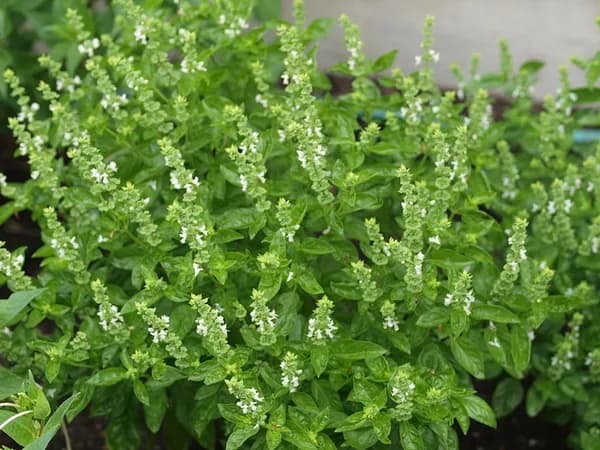
Sweet basil (Ocimum basilicum) gives you fragrant leaves for cooking, but it needs more light than many foliage houseplants. The photograph shows an outdoor plant already in flower. A windowsill plant can be productive too, especially with a suitable grow light in a dark season.
Give it useful light
Aim for a sunny position with several hours of direct light. If winter days are short or the window is dim, use a grow light. Weak, stretched stems signal that the plant needs more light, not just more fertiliser. Keep it away from cold glass and draughts.
Water by checking the pot
Use a container with drainage. Feel the mix just below the surface and water when it starts to dry, then let excess water escape. A small pot in strong sun may dry quickly, while a large pot in low light may stay wet. Wilt is a prompt to check the mix, not a reason to water automatically.
Harvest for new growth
Take stem tips just above a pair of leaves so side shoots can grow. Harvest regularly while leaving enough foliage for the plant to recover. Flower buds can be pinched to keep more leafy growth, though flowering is part of basil's life cycle. An older plant eventually declines; start new plants from seed or suitable cuttings instead of promising indefinite harvests.
Watch for disease
Yellowing leaves with gray, downy growth underneath can indicate basil downy mildew. Avoid crowding, allow air movement and check the underside before treating a plant for a different problem. Leaf spots may have several causes, including cold, pests or disease; remove badly affected material and check conditions.
Food and pets
Wash harvested leaves before eating. ASPCA lists Ocimum basilicum as non-toxic to cats and dogs. If you use any pest-control product, follow its label for edible herbs and keep animals away from the treatment.
Related LeafLovers guides
Sources for this guide
3 sources
Spotted something that needs correcting? Send a message.