Anthurium Care: Light, Water and New Blooms
Care for the glossy leaves and colourful spathes of flamingo flower.
Quick questions
Why is my Anthurium not blooming?
Check light and general health. A dim position is a common reason for poor flowering.
Is the red part a flower?
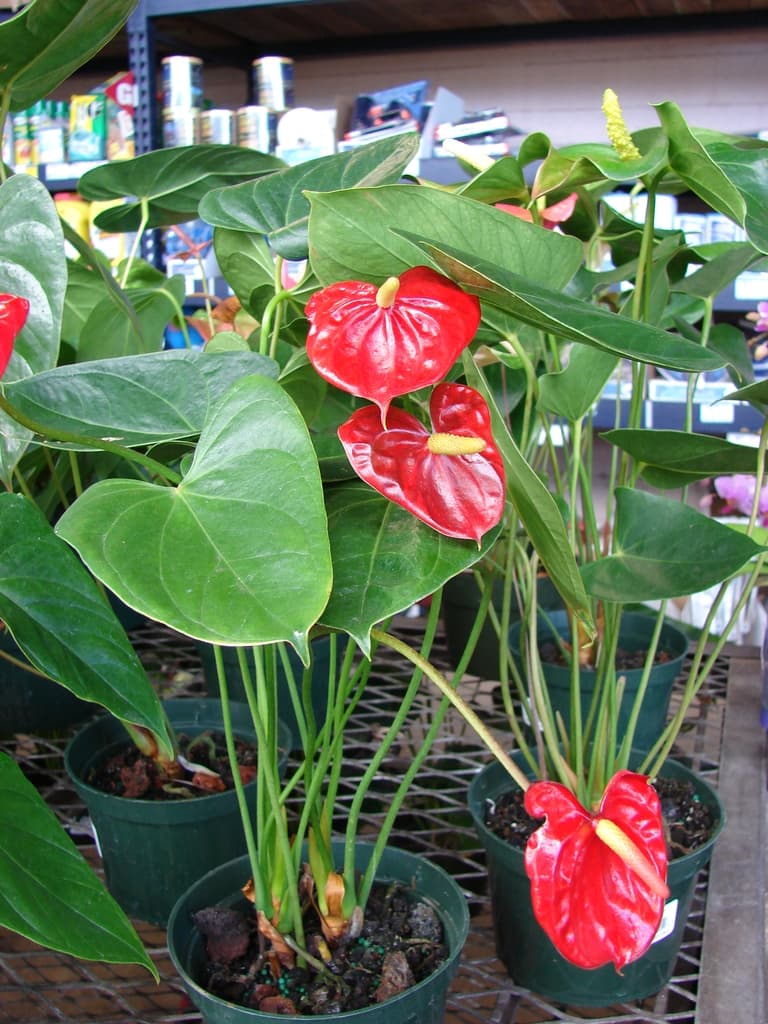
It is a spathe, a modified leaf; the tiny flowers are on the central spike.
Should its roots stay wet?
No. Use an airy draining mix and water after the upper layer begins to dry.
Is Anthurium safe for pets?
No. It contains irritating calcium oxalate crystals; keep it out of reach.
Anthurium andraeanum is often sold as flamingo flower. The glossy red, pink or white spathe is a modified leaf surrounding a spike of tiny flowers. The photograph shows red-spathed plants in nursery pots.
Light and position
Give bright indirect light. Too little light can reduce flowering, while strong direct sun can mark leaves and spathes. Keep the plant warm and away from cold draughts.
Water by checking the pot
Check the upper mix and water when it starts to dry, then drain the pot. Do not leave the roots sitting in water. A drooping leaf is a reason to inspect moisture and roots before watering automatically.
Soil, pot and growth
This plant grows as an epiphyte in nature, so use an airy mix with organic pieces in a pot with drainage. Repot when roots crowd the pot or the mix loses structure. Avoid burying the crown deeply.
If something looks wrong
Brown edges may follow dry air, uneven moisture or fertiliser build-up. If flowers fade, remove the spent stem at its base with clean tools and assess light and growth before feeding more. No fertiliser guarantees blooms.
Safety and the next check
Anthurium contains irritating calcium oxalate crystals. Keep it away from chewing pets and children and seek veterinary advice if a pet eats it.
Keep a short record of when you checked the mix, watered and moved the plant. Compare new growth with your notes before making another change.
Related LeafLovers guides
Sources for this guide
2 sources
Spotted something that needs correcting? Send a message.